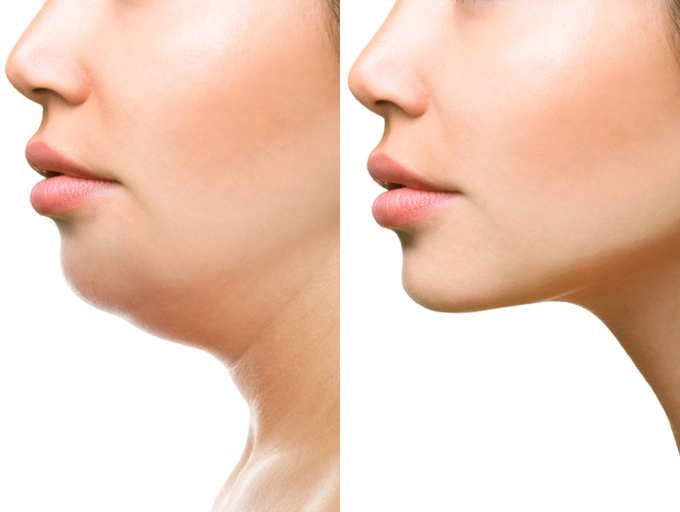
Double chin reduction treatment is one of the most common aesthetic concerns seen across age groups today. While it is often assumed to be caused by excess fat, in reality, double chin formation can result from fat accumulation, skin laxity, muscle malposition, skeletal structure, or abnormal neck angles. This is why not every patient benefits from the same treatment.
Understanding when to choose non-surgical methods, minimally invasive procedures like microlift, or surgical options such as platysmaplasty is essential for achieving natural, long-lasting results.
Why One Treatment Does Not Fit All
Patients often ask why treatments like HIFU, fat-dissolving injections, fillers, or microlift worked for someone else but not for them. The answer lies in anatomy.
Double chin can be broadly classified into:
• Fat-dominant double chin
• Skin laxity–dominant double chin
• Muscle-related or structural double chin
• Congenital neck deformities (turkey neck)
Each category requires a different treatment approach.
- Non-Surgical Double Chin Reduction (HIFU, RF, Lipolytics)
Who is this best for?
• Age group: 20–35 years
• Mild to moderate fat under the chin
• Good skin elasticity
• No muscle laxity or neck banding
• Normal neck and jawline anatomy
Common treatments:
• Fat-dissolving injections (lipolytics)
• HIFU or RF skin tightening
• Energy-based devices
What it can correct:
• Localised submental fat
• Mild skin looseness
• Early jawline blunting
Limitations:
Non-surgical treatments do not correct muscle position, abnormal neck angles, or skeletal disproportions. If the platysma muscle is weak, separated, or abnormally positioned, results will be minimal or temporary.
- Minimally Invasive Double Chin Reduction (Microlift / Endolift)
Who is this best for?
• Age group: 30–45 years
• Mild to moderate skin laxity
• Early platysma laxity (but not congenital defects)
• Fat + early skin sagging
• Patients seeking quicker recovery
What microlift addresses:
• Mild skin tightening
• Partial fat reduction
• Early muscle laxity
Microlift works by stimulating collagen and causing controlled tightening of the skin and superficial tissues. It is ideal when anatomy is normal, but aging has just begun.
Limitations:
Microlift cannot correct:
• Congenital turkey neck
• Abnormal cervicomental (neck–chin) angle
• Platysma muscle separation
• Bone or proportional defects
In such cases, patients often feel that nothing worked, when in fact, the wrong modality was chosen.
- Surgical Double Chin Reduction – Platysmaplasty
When is surgery truly required?
Platysmaplasty is indicated when the problem is structural, not superficial.
Ideal candidates:
• Age group: Any age, commonly 25–55 years
• Lean patients with persistent double chin
• Patients with congenital turkey neck
• Abnormal muscle placement
• Poor Cervi omental or submental–cricoid angle
• Neck banding or muscle laxity
• Failed non-surgical or minimally invasive treatments
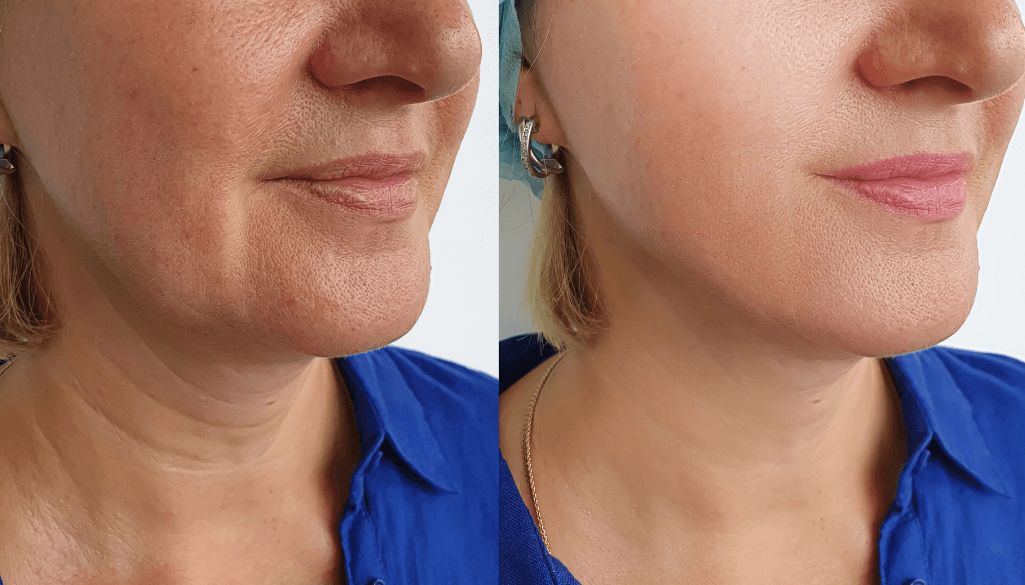
Congenital vs Acquired Turkey Neck
Acquired turkey neck:
• Seen with aging
• Responds to microlift or surgery depending on severity
Congenital turkey neck:
• Present from a young age
• Seen even in slim individuals
Caused by:
• Abnormal platysma muscle orientation
• Skeletal and proportional imbalance
• Poor neck–chin angle
• Muscle separation
These cases cannot be corrected with HIFU, fillers, lipolytic, or micro lift.
What Does Platysmaplasty Correct?
Platysmaplasty is a definitive surgical solution that addresses:
• Repositioning and tightening of the platysma muscle
• Correction of abnormal neck angles
• Structural refinement of neck anatomy
• Long-term jawline and neck definition
This procedure works at the muscle, connective tissue, and structural level, which is why it is the gold standard for true double chin correction in congenital and severe cases.
Choosing the Right Treatment: A Summary
| Problem Type | Best Treatment |
| Fat only, young age | Non-surgical |
| Fat + early skin laxity | Microlift |
| Muscle laxity, angle defect | Platysmaplasty |
| Congenital turkey neck | Platysmaplasty |
| Failed non-surgical treatments | Surgical evaluation |
Double chin reduction is not about choosing the newest technology, but about choosing the right treatment for the right anatomy. While non-surgical and minimally invasive procedures work beautifully in selected patients, surgical platysmaplasty remains essential for congenital turkey necks, muscle malposition, angle defects, and proportional abnormalities.
A thorough facial and neck assessment is the key to delivering results that are not just visible but lasting.
Frequently Asked Questions (FAQs) – Double Chin Reduction
- What causes a double chin?
A double chin can be caused by:
• Excess fat under the chin
• Loose or sagging skin
• Weak or separated neck muscles (platysma)
• Poor neck–chin (cervicomental) angle
• Congenital structural issues involving muscle or bone
Not all double chins are due to weight gain, which is why treatment needs to be personalised.
- Can a double chin be reduced without surgery?
Yes, non-surgical treatments work well in selected patients. These include:
• Fat-dissolving injections
• HIFU or RF skin tightening
They are best suited for younger patients (20–35 years) with:
• Mild fat accumulation
• Good skin elasticity
• Normal muscle and neck anatomy
However, non-surgical treatments do not correct muscle laxity or structural defects.
- What is the difference between non-surgical and minimally invasive treatments?
Non-surgical treatments act on the skin and fat only.
Minimally invasive treatments like Microlift / Endolift work slightly deeper.
Microlift is suitable for:
• Age group: 30–45 years
• Mild to moderate skin laxity
• Early muscle laxity due to aging
• Patients wanting faster recovery than surgery
Microlift tightens tissues but does not reposition muscles or correct angles.
- Why do non-surgical treatments fail in some patients?
They fail when the root cause is not fat or skin, but:
• Abnormal platysma muscle placement
• Poor cervicomental angle
• Congenital turkey neck
• Skeletal or proportional imbalance
In such cases, energy-based devices or injections cannot give meaningful or lasting improvement.
- What is platysmaplasty?
Platysmaplasty is a surgical neck contouring procedure that corrects:
• Loose or abnormally positioned platysma muscle
• Neck banding
• Poor neck–chin angle
• Structural causes of double chin
It is considered the gold standard surgical treatment for true neck laxity and congenital turkey neck.
- Who needs surgical double chin reduction?
Surgical correction is needed when:
• The double chin is present despite being lean
• The issue is congenital
• There is visible muscle laxity or neck banding
• Non-surgical and microlift treatments have failed
• There is a significant angle or proportional defect
Age is not the deciding factor anatomy is.
- What is congenital turkey neck?
Congenital turkey neck is a condition where the neck lacks definition from a young age due to:
• Abnormal muscle positioning
• Poor neck–chin angle
• Structural or skeletal imbalance
These patients often seek treatment early but do not respond to non-surgical options.
- Can microlift or HIFU correct congenital turkey neck?
No. Congenital turkey neck requires muscle repositioning and angle correction, which can only be achieved surgically through platysmaplasty.
- Is platysmaplasty only for older patients?
No. Platysmaplasty can be performed in:
• Younger patients with congenital defects
• Middle-aged patients with muscle laxity
• Older patients with advanced neck aging
The selection depends on neck anatomy, muscle position, and angle defects, not just age.
- How long do results last?
• Non-surgical treatments: Temporary, maintenance required
• Microlift: Long-lasting but not permanent
• Platysmaplasty: Long-term, often permanent correction
Surgical correction provides the most stable and predictable results.
- How do I know which treatment is right for me?
A detailed clinical examination and neck analysis is essential. Your doctor will assess:
• Fat thickness
• Skin elasticity
• Muscle position
• Neck–chin angle
• Facial proportions
Only after this can the correct treatment—non-surgical, minimally invasive, or surgical be recommended.
- Is surgery always better than non-surgical treatment?
Not at all. The best treatment is the right treatment.
Many patients achieve excellent results with non-surgical or minimally invasive procedures when selected correctly.
Surgery is reserved for cases where anatomy demands correction, not enhancement.
Book a detailed neck and jawline assessment to identify the true cause of your double chin. Get a personalised treatment plan, non-surgical, microlift, or surgical based on your anatomy, not trends, for real and lasting results.